
INTRODUCTION
Picture this: You spot a flashy affiliate offer promising 50% commissions. You sign up, craft content, and push traffic for weeks; crickets, no sales. Your time vanishes into a black hole. This happens to affiliates every day. They chase high payouts or network hot lists without checking if the offer fits their audience or converts reliably.
Affiliate marketing demands better. You need a repeatable process to find profitable affiliate offers that match your strengths and audience needs. This guide delivers exactly that: a five-step method using AI as your research assistant. No guesswork. No hype. Just clear steps to research the offers that stand a chance.

What Makes an Affiliate Offer Profitable
Profitable does not mean the highest commission. Focus on factors that drive real results. Start with audience fit: Does the product solve a problem your readers face? Check conversion quality through the sales page and upsells. Review cookie duration and attribution rules, as they affect your earnings window.
Payout reliability matters too. Pick networks with solid reputations and timely payments. Weigh refund risks, since chargebacks eat profits. Above all, ensure you can promote honestly. If the product feels shady or mismatched, skip it. High commissions tempt, but they crumble without trust and conversions.
Step 1: Define a Niche You Can Speak to with Authority
Build from what you know. Draw on your skills, experiences, or existing audience. A fitness coach might target home workouts for busy parents. A software user could focus on tools for solopreneurs.
Use AI to expand. Paste this prompt into ChatGPT: “List 10 common problems in [your niche], plus related product categories like software, courses, or gear.” Review the output. Pick adjacent ideas that excite you. Narrow to one niche. This grounds your affiliate offer research with AI in genuine authority.
Step 2: Use AI to Map Demand, Questions, and Search Intent
AI shines here as a demand scout. Generate buyer insights fast. Try these copy-paste prompts:
- “What are the top 15 questions people ask when searching for [niche product] solutions? Include objections and comparisons.”
- “Summarize search intent for ‘best [product] for [audience pain point]’ from forums and reviews.”
- “List 10 buyer objections to [product type] and how they compare top options.”
AI spits out patterns. Cross-check against Google searches, Reddit threads, and Amazon reviews. Note high-intent queries like “best keto meal plan app.” These reveal profitable affiliate offers waiting in your niche. AI accelerates; real data confirms.
Step 3: Pull Candidate Offers and Score Them Against a Simple Checklist
Head to networks like ClickBank (https://clickbank.com), WarriorPlus (https://warriorlus.com), or (https://shareasale.com). Search your niche keywords. Grab 5-10 offers. Now score them. Use this checklist:
- Audience match: Solves a mapped pain point? (1-10)
- Problem proof: Testimonials or case studies on sales page? (1-10)
- Page clarity: Clear benefits, no hype overload? (1-10)
- Value balance: Commission fair relative to price? (1-10)
- Cookie length: 30+ days ideal? (1-10)
- Network rep: Reliable payments? (1-10)
- Honest promo: Content you believe in? (1-10)
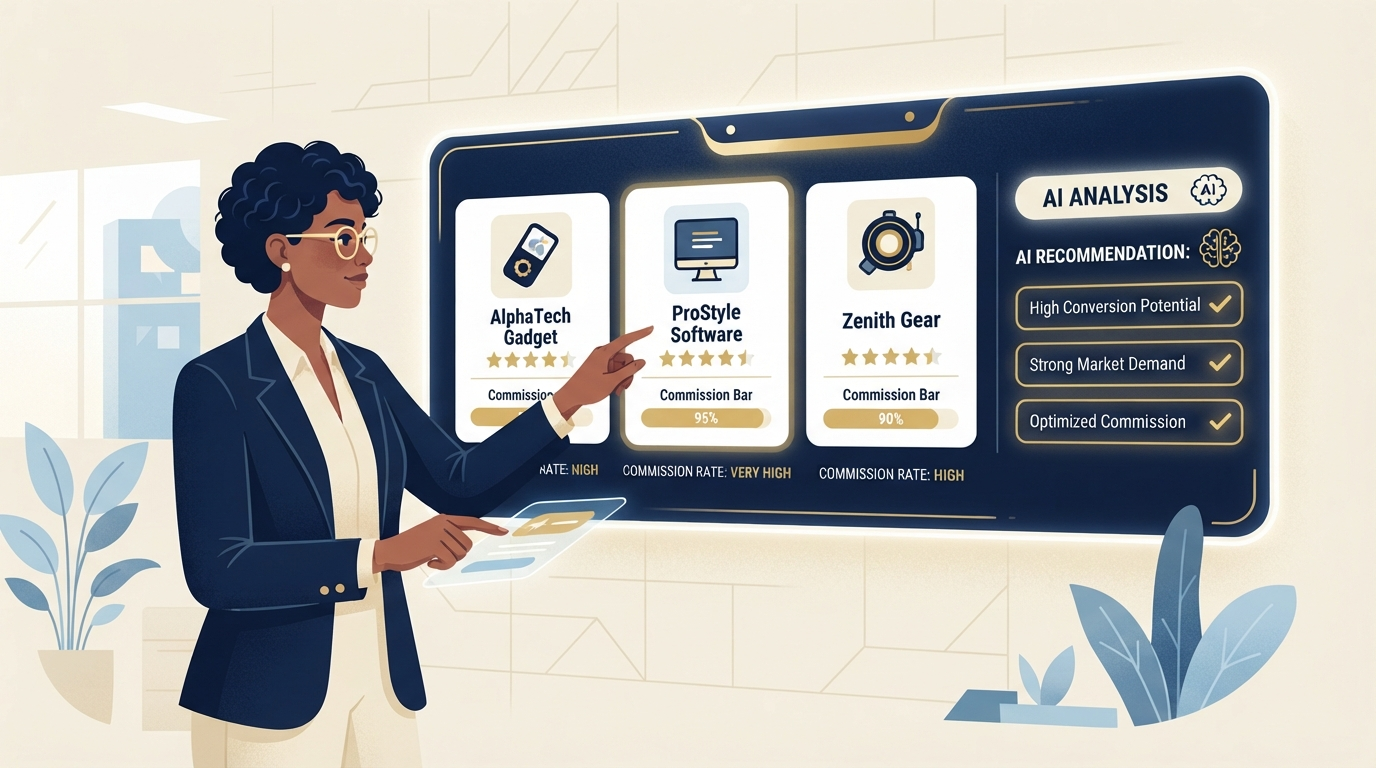
Tally scores. Rank top 3. Prompt AI: “Score these offers [list details] on fit for [niche audience].” Refine your picks. This is affiliate offer research with AI at its practical best.
Step 4: Study Competition and Find a Content Angle the Market Is Missing
Search your keywords. Note top content. Use AI: “Summarize top 10 results for ‘[keyword]’. List angles: Reviews, tutorials, comparisons.” Spot gaps. Few beginner guides? No implementation walkthroughs? Claim that space.
Your edge: Honest angles from your authority. A comparison post or step-by-step setup guide. This positions you to promote find affiliate products with AI-discovered insights.
Step 5: Validate with a Small Test Before You Commit More Time
Read the full sales page. Sign up as affiliate. Check creatives, terms, refunds. Try the product or trial if available. Run a quick test: Post to a small list or social channel. Track clicks and interest.
Data decides. If it resonates, scale. This closes the loop on how to find profitable affiliate offers.
Mistakes to Avoid in Affiliate Offer Research
Skip these pitfalls. Do not chase every high-payout offer; fit trumps flash. Always read the sales page end-to-end. Ignore refunds or support at your peril, as they signal quality. Never promote without grasping the product fully.
Pick Your Niche and Score Offers This Week
Grab three candidate offers from your niche. Run them through the scorecard. A ranked shortlist beats browsing network homepages blind. Start small, learn fast.
Turn Your Shortlist Into a 7-Day Test
Day 1: Choose a specific audience
Day 2: Find potential offers
- Commission amount and payment schedule
- One-time or recurring commissions
- Cookie duration
- Refund and chargeback policies
- Minimum payout requirements
- Product pricing
- Customer support quality
- Affiliate program rules
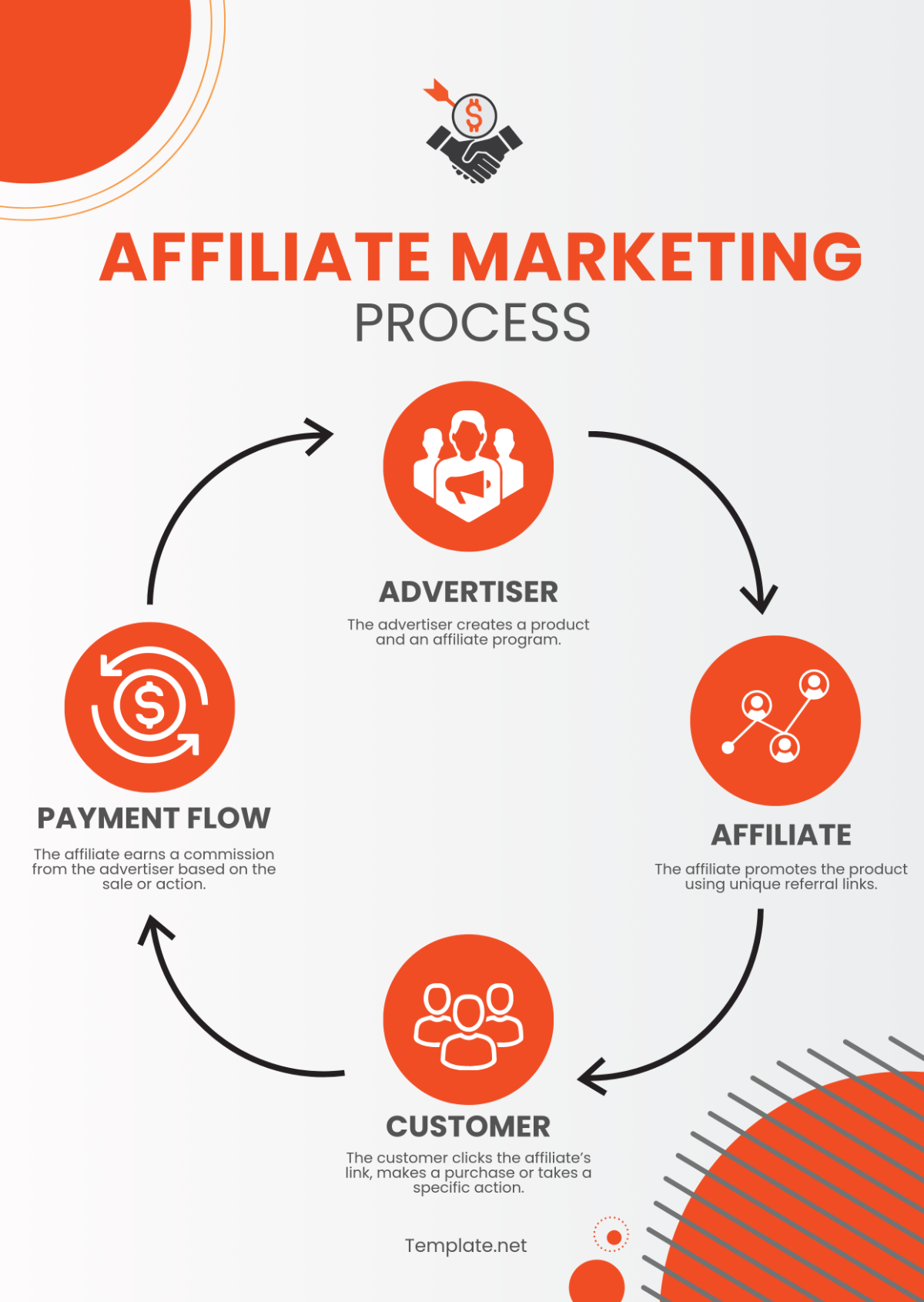 affiliate marketing Diagram Template to Edit Online" />
Day 3: Score each offer
- Audience fit: Does the product solve a problem your audience actually has?
- Demand: Are people searching for information about this problem?
- Competition: Can you create content that offers something more useful than existing results?
- Content potential: Can you write tutorials, comparisons, reviews, and answers about the product?
Day 4: Check the offer’s credibility
Day 5: Plan useful content
- A beginner’s guide to the problem
- A comparison with similar solutions
- A practical tutorial
- A review that explains who should and should not use the product
- Answers to common customer questions